Can Personalized Coffee Packaging Increase Coffee Sales?
Yes. Personalized coffee packaging can raise coffee sales when the added printing and packing cost stays below the extra revenue it produces. In a 2014 Coca-Cola case study published by Ogilvy, personalized bottles helped lift young-adult consumption by 7% in Australia, showing how name-based packaging can change purchasing behavior in a mature beverage category. For coffee sellers, the strongest applications are gifts, subscriptions, limited releases, corporate orders, and premium whole-bean products. A 5% increase in selling price is not useful if customization adds 8% to unit cost, so margin, reorder rate, average order size, and packaging cost should be measured together.
Coffee is difficult to judge before purchase because aroma, acidity, sweetness, body, and aftertaste cannot be tested through a sealed retail bag. Packaging carries information the shopper can evaluate immediately: origin, roast date, roast level, processing method, tasting notes, net weight, certifications, and brewing guidance. In a 2013 academic study involving 120 participants, package design changed expected sensory characteristics and willingness to buy food products, supporting the broader finding that visual presentation affects expectations before consumption. Personalization adds a customer name, occasion, location, message, or selected design to that information.
That effect is especially relevant in a large market. The National Coffee Association reported in 2024 that 67% of American adults had consumed coffee during the previous day, the highest level reported in roughly two decades. A seller competing in a category with frequent repeat purchases does not necessarily need a radically different bean to create another offer; the same 250 g or 12 oz roast can be sold in a standard bag, birthday package, subscription edition, or company-branded gift.
A personalized bag does not improve the beans. It changes the reason someone may be willing to buy the beans, particularly when the purchase is intended for another person.
Gifting makes that distinction easier to see. A shopper buying a $16 bag for home use may compare roast, origin, freshness, and price. A shopper buying a $25 coffee gift may also pay for a printed name, message card, box, sleeve, or special date. If personalization adds $2.20 in printing, materials, and handling while the retail price rises by $7, the additional gross contribution before other expenses is $4.80 per order. At 2,000 personalized orders, that difference reaches $9,600.
Higher prices, however, should not be confused with better economics. A coffee company can compare standard and personalized orders using a small operating model before expanding production.
| Measure | Standard order | Personalized order |
|---|---|---|
| Selling price | $18.00 | $24.00 |
| Coffee + base package | $7.00 | $7.00 |
| Added personalization cost | $0 | $2.25 |
| Gross contribution | $11.00 | $14.75 |
| Contribution rate | 61.1% | 61.5% |
In this example, personalization raises gross contribution per order by 34.1%, from $11 to $14.75, while leaving the contribution rate almost unchanged. The numbers become less attractive if customized printing requires extra labor, separate packing stations, expensive minimum orders, or discarded misprints. A misspelled name on 3% of 5,000 orders would create 150 replacement packages, so error rates belong in the cost calculation.
Production method therefore matters almost as much as design. Traditional printing works well when thousands of identical bags are required, but variable digital printing is better suited to shorter runs because names, numbers, illustrations, and QR codes can change between impressions without producing a separate plate for every version. A roaster selling 20 personalized designs in runs of 100 units faces very different inventory requirements from one ordering 10,000 units of a single printed bag.
Smaller runs also make seasonal testing easier. Instead of committing to 20,000 Christmas bags months before demand is known, a seller can release a limited quantity and reorder according to sales. If 1,000 standard gift boxes sell through at 60% while 1,000 personalized boxes sell through at 82% during the same period, the personalized version has moved 220 more units. Comparing the two groups still requires similar prices, traffic sources, coffee quality, delivery promises, and promotional exposure.
Sales comparisons are useful only when the package is the main changed element; changing the price, coffee, advertising, and package at the same time makes the result difficult to interpret.
A practical online comparison can start with 4,000 qualified product-page visits divided between two offers. If 2,000 visitors see the standard bag and 80 buy, the purchase rate is 4%. If another 2,000 see a personalized option and 100 buy, the rate is 5%. The second group produces 25% more orders from equal traffic, but the seller should also record cancellation rates, personalization costs, packing time, returns, and repeat purchases before expanding the offer.
Average order size deserves separate attention because personalized products often sit inside gift bundles. A shopper may move from one $18 bag to a $32 package containing coffee, a personalized pouch, greeting card, and presentation box. If only 15% of 10,000 annual customers choose the $32 option instead of the $18 product, the difference in sales is $21,000 before accounting for the extra materials and fulfillment costs.
Corporate orders can increase order size further. A café or roaster that normally processes individual orders can offer branded coffee for hotels, conferences, employee gifts, agencies, property companies, and professional services firms. One business order of 500 bags at $14 each produces $7,000 in sales; 20 similar orders produce $140,000. Personalized fields can include company names, event dates, recipient names, short messages, or unique QR codes without requiring 20 different coffee recipes.
QR codes give the package another job after delivery. A unique code can send a recipient to brewing instructions, the farm profile, a reorder page, or a subscription offer. If 3,000 gift recipients receive unique codes, 600 scan them and 90 place an order, the scan rate is 20% and the purchase rate among scanners is 15%. The seller can then compare that result with ordinary gift packaging instead of relying on customer comments about appearance.
Repeat ordering is particularly relevant because coffee is consumed rather than stored indefinitely. Suppose 1,000 first-time customers buy a personalized bag and 320 purchase again within 90 days, producing a 32% reorder rate. If a comparable standard-packaging group records 270 reorders, or 27%, the five-percentage-point difference can be assessed against acquisition source, discount use, coffee type, and order size. A 2024 or 2025 cohort should also be followed long enough to separate holiday gift buyers from regular household customers.
Social sharing may provide additional exposure, although it should not be treated as guaranteed free advertising. A package displaying a recipient's name gives people more reason to photograph an unboxing than an ordinary shipping pouch. If 5,000 personalized orders generate 250 tagged customer posts, the posting rate is 5%. The useful commercial question is whether those posts generate visits and orders, not the number of likes attached to them.
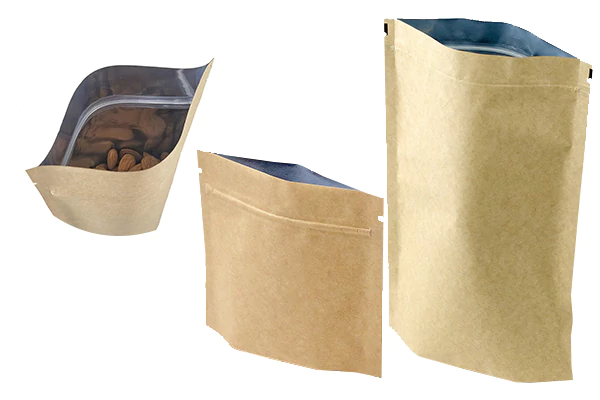
Material choice also affects how the personalized offer is received. Coffee bags commonly need barriers against oxygen, moisture, and light, while roasted beans may require a one-way degassing valve. A visually attractive package that shortens acceptable shelf life creates a product-quality problem. Brands considering environmentally friendly pouch packaging therefore need to compare printability and appearance with barrier performance, valve compatibility, sealing conditions, disposal instructions, and the packaging supplier's documented material specifications.
Environmental claims require careful wording as well. In the United States, the Federal Trade Commission's Green Guides have long addressed claims such as recyclable, degradable, compostable, and renewable. A package should not be presented as broadly environmentally preferable merely because one layer contains recycled material. If a pouch contains 30% recycled content, stating that measurable figure is clearer than making an undefined environmental claim, provided the supplier documentation supports it.
Personalization also has limits at the lower-priced end of the coffee market. Adding $2 of variable packaging expense to an $8 product increases product-level cost pressure much more than adding the same $2 to a $30 gift set. For high-volume supermarket coffee, standardized printing can remain more economical; for specialty coffee, subscriptions, direct-to-consumer gifts, and corporate programs, customers have more reasons to pay for presentation.
Operational speed can create another limit. If a normal order takes 45 seconds to pack and personalization raises the process to 90 seconds, 1,000 orders require an additional 12.5 labor hours. At a loaded labor cost of $24 per hour, that adds $300 before printing waste, equipment, software, and replacement orders. During a 10,000-order holiday period, small differences in handling time become financially material.
For that reason, personalization options should stay controlled. Allowing customers to enter unlimited text creates proofreading, layout, offensive-content, and production issues. A fixed field of 20–30 characters for a name, three approved typefaces, four design choices, and a defined preview process can keep production more predictable. If the error rate falls from 4% to 1% across 10,000 packages, 300 fewer packages need correction or replacement.
The strongest offer may not use a person's name at all. A 2026 Valentine's edition, a New York café-exclusive design, a hotel-specific roast package, or a "12th monthly delivery" subscription sleeve can provide personal relevance while remaining easier to produce in batches. Segment-level customization can retain much of the commercial benefit while reducing the unit-level complexity associated with one-off printing.
A seller deciding whether to expand personalized packaging can watch five numbers together:
-
Purchase rate: 4.0% versus 5.0% can represent a 25% relative increase.
-
Average order size: $18 versus $24 adds $6 per completed order.
-
Added packaging cost: $2.25 on a $24 order equals 9.4% of selling price.
-
Reorder rate: 27% versus 32% over 90 days shows whether customers return.
-
Error rate: reducing misprints from 3% to 1% removes 100 replacements per 5,000 orders.
Those measurements keep the discussion tied to sales and operating performance. A personalized coffee package earns its place when customers buy it more often, spend more per order, return at a higher rate, or purchase it for occasions that the standard bag does not serve. A 25% lift in orders matters only when the additional packaging, labor, waste, and fulfillment expense still leaves more gross profit per customer.