A bikini trimmer and Trimmer: Use Cases, Tradeoffs, and Common Mistakes
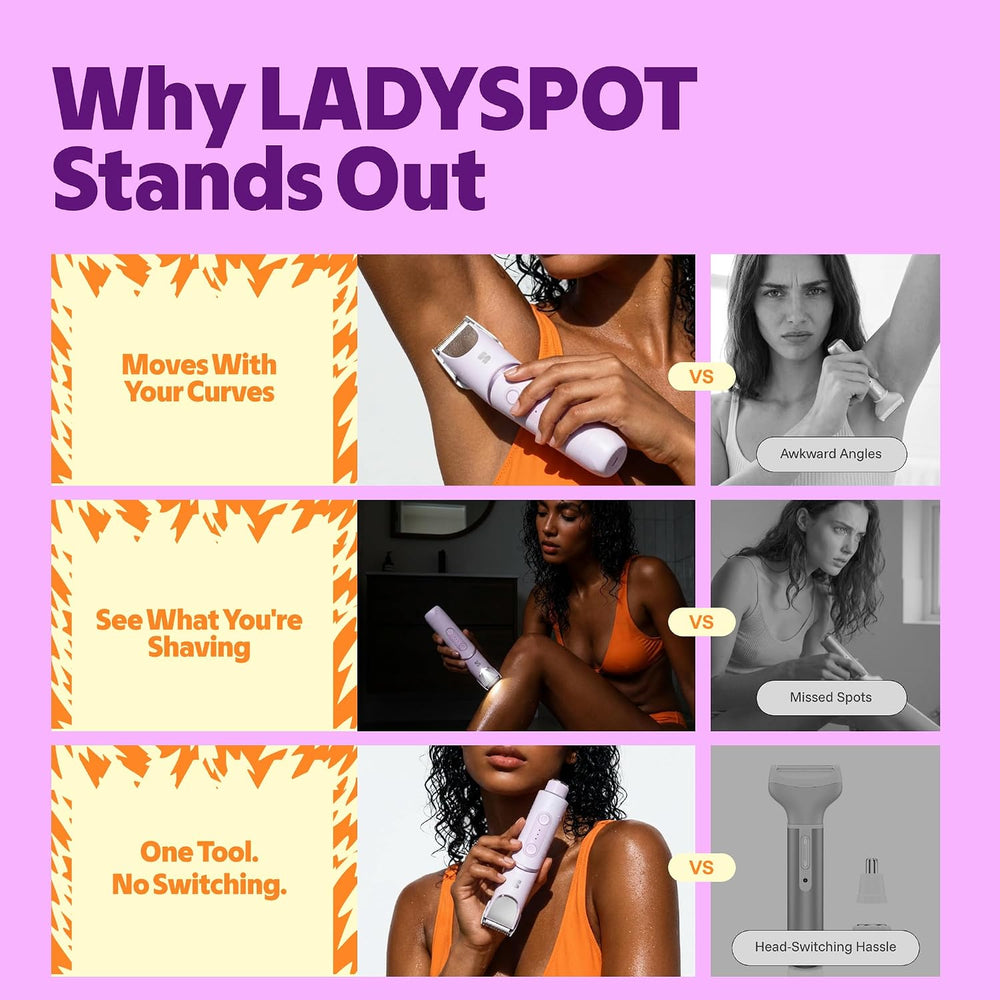
Choosing between a bikini shaver and a trimmer often comes down to understanding one simple idea: trimming and shaving solve different parts of the grooming process. A trimmer is designed to manage length and create control, while a shaver focuses on achieving a closer finish. For many users, the best approach is not choosing one tool over the other, but understanding when each stage is useful.
A bikini grooming routine usually works better when you match the tool to your goal. If you want to reduce length, shape hair, or maintain a comfortable level of coverage, trimming may be the first step. If you want a smoother finish afterward, shaving may become the second step. Understanding this difference helps you avoid common mistakes and choose a method that fits your needs.
The Two Roles: Trimming First and Closer Finish Later
A common misunderstanding is treating every bikini grooming tool as if it performs the same task. In reality, trimming and shaving have different purposes.
A bikini trimmer mainly focuses on controlling hair length. It can be useful when hair is longer, when you want a more natural look, or when you want to define a specific area without removing all hair. Because it works by reducing length, it often serves as the preparation stage.
A bikini shaver focuses on creating a closer result by cutting hair closer to the skin surface. This makes it more suitable when the goal is a smoother appearance rather than simply reducing length.
The important point is that these are not competing tools. They are different steps in a process:
-
Trim longer hair to create a manageable length.
-
Adjust the area based on your preferred style or level of coverage.
-
Use a closer-finish method when a smoother result is desired.
Thinking in stages makes it easier to choose the right tool instead of expecting one device to handle every situation equally.
Best Use Cases for a Bikini Shaver and Trimmer
Different grooming goals require different approaches. Before choosing a tool, consider what you actually want to achieve.
When length control is the priority
A trimmer can be a practical choice when your main goal is maintenance. For example, some users prefer keeping hair at a shorter, controlled length rather than removing it completely.
This approach can be useful when:
-
You want to maintain a consistent length.
-
You prefer more coverage.
-
You need quick regular grooming.
-
You want more control over the final shape.
In these situations, focusing on control rather than maximum closeness may provide a better match for your routine.
When a smoother finish is the priority
A closer-finish tool may be more appropriate when appearance or smoothness is the main goal. However, the result depends on several factors, including technique, skin sensitivity, and how the tool is used.
A smoother finish usually requires more attention because the tool is working closer to the skin. Moving slowly, avoiding unnecessary repeated passes, and following the tool instructions can help create a more consistent experience.
When a combination approach makes sense
For many grooming routines, the most effective method is a combination of both functions. Starting with length management can make the later finishing step easier and more controlled.
A combined system can be helpful for people who do not want to choose between only trimming or only shaving. It supports a step-by-step approach where each function has a clear role.
If you are comparing options designed around both stages, you can explore how a bikini shaver and trimmer combination fits into a broader grooming routine.
Limitations: Why One Tool May Not Work for Every Situation
Although bikini shavers and trimmers can be useful grooming options, there are situations where expectations may not match the tool’s purpose.
One common issue is expecting a trimmer to create the same result as a closer-finish shaver. Since trimming focuses on shortening hair rather than removing it near the skin, it may not produce the same appearance.
Another issue is expecting a closer-finish tool to replace preparation. When hair is longer, immediately focusing on a close finish may require more effort and careful handling.
Tool selection also depends on personal preference. Some users prioritize convenience and maintenance, while others prioritize a smoother result. Neither approach is automatically better because the ideal choice depends on the desired outcome.
Common Mistakes When Choosing and Using These Tools
Understanding common mistakes can make the decision process easier.
Choosing based only on the word “shaver”
Many people assume a product labeled as a shaver should handle every grooming task. However, the important question is not only what the tool is called, but what role it plays in the routine.
Look at whether you need:
-
Length control.
-
Styling and shaping.
-
A closer finishing step.
-
A tool that supports multiple stages.
Skipping preparation when hair is longer
Trying to achieve a close result immediately may not always be the most efficient approach. Managing length first can make the overall process easier.
Ignoring maintenance requirements
Grooming tools work best when they are properly cared for. Cleaning according to the manufacturer’s instructions, keeping components maintained, and storing the tool appropriately can help support consistent performance over time.
Focusing only on the final result
The process matters as much as the outcome. A tool that matches your routine, comfort level, and preferred maintenance style may be a better choice than one selected only because it promises a specific type of finish.
Practical Checklist Before Choosing a Bikini Grooming Tool
Before making a decision, ask yourself these questions:
1. What is my main goal?
Do you want to reduce length, maintain a style, or achieve a closer finish? Your answer determines which function matters most.
2. How often will I use it?
A frequent maintenance routine may require a different approach from occasional grooming.
3. Do I need one function or multiple stages?
If your routine includes both preparation and finishing, a combined approach may be more convenient.
4. How much control do I want?
Some users prefer gradual adjustment and flexibility, while others prefer a simpler routine.
5. Am I choosing based on my actual needs?
Avoid selecting a tool because of marketing language alone. Focus on the specific task you need it to perform.
Conclusion: Choose the Tool Based on the Process
A bikini shaver and trimmer should not be viewed as identical tools. A trimmer helps with length control and preparation, while a shaver focuses on a closer finishing step. Understanding this difference makes it easier to build a grooming routine that matches your personal preferences.
The best choice depends on your goal, your preferred level of maintenance, and how you want each stage of the process to work. Instead of looking for one tool that does everything, consider which functions you actually need and how they fit into your routine.